How to Use AI Agents for Your Digital Marketing
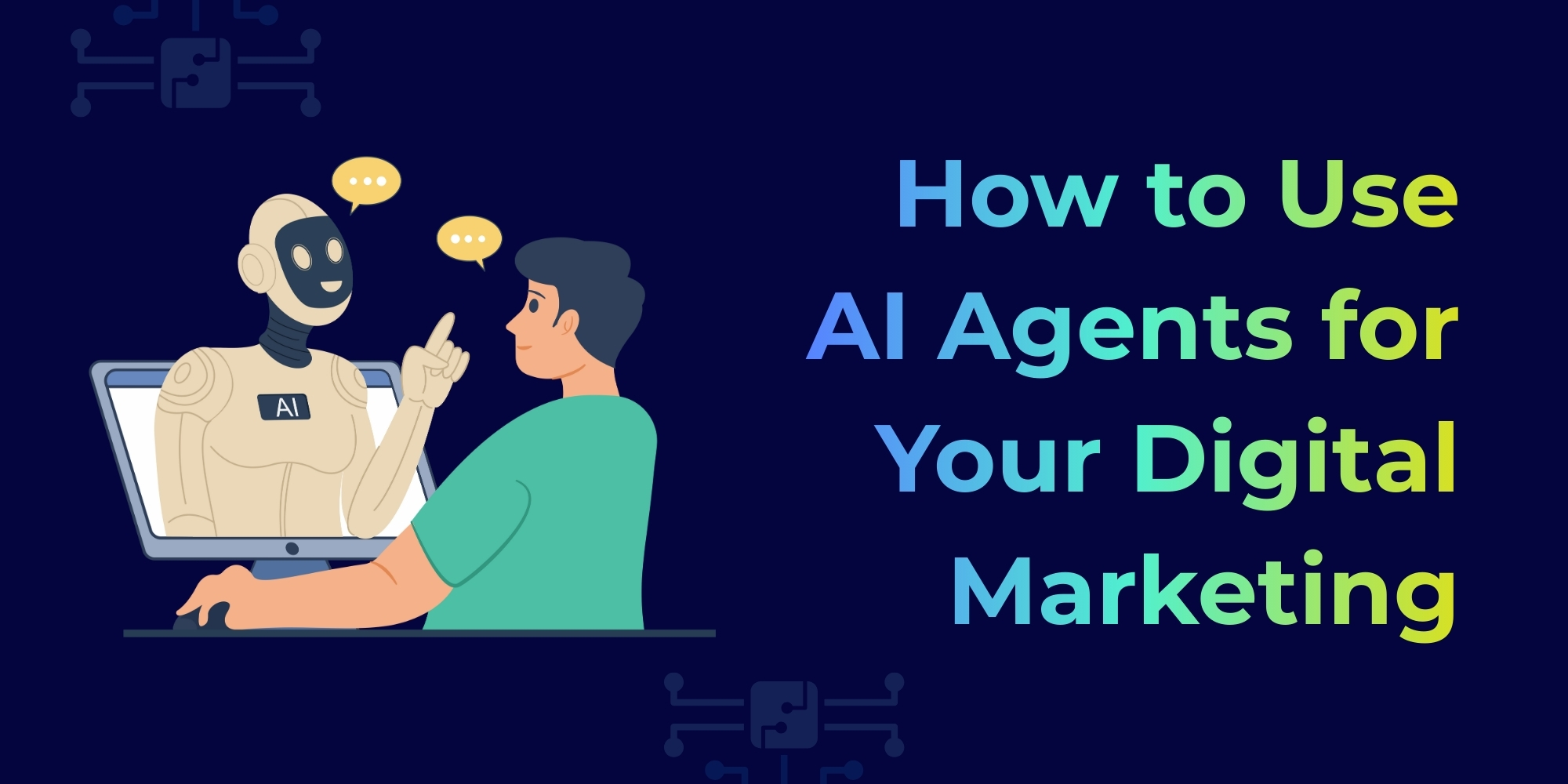
Most businesses think AI agents are just fancy chatbots. They set them up to answer basic questions and call it done. They don't get what AI agents actually do, and watch competitors leverage these smart systems to change their marketing.
Does this sound like you? You're not alone.
Digital marketing offers great chances for AI agents. But only if you know how to use them correctly. Random AI agent use gives random results. Unlike traditional marketing tools that require constant human oversight, AI agents can perform complex tasks and support a wide range of marketing functions with less human interaction. These autonomous systems are no longer the future—they're already running the show, quietly optimizing your ads, tweaking your emails, and managing customer journeys.
What Are AI Agents and How Do They Work?
AI agents are sophisticated AI-powered assistants that can autonomously handle multiple marketing tasks with minimal human intervention. Unlike traditional marketing tools that simply automate specific functions, AI agents can conduct complete marketing processes from planning to execution and optimization.
These intelligent systems leverage machine learning, natural language processing, and predictive analytics to:
- Analyze user behavior, preferences, and history to generate tailored messages for individual customers
- Understand natural language and track conversation context for more human-like interactions
- Make real-time decisions about campaign optimization based on performance data
- Generate content that adapts to audience response and brand voice
- Predict customer needs and anticipate market trends
The key differentiator is their ability to learn and adapt continuously, making them true partners in your marketing strategy rather than just tools that execute predefined tasks.
Applications of AI Agents in Digital Marketing
Customer Engagement and Conversational Marketing
AI agents have transformed customer interaction through intelligent chat interfaces that go far beyond traditional chatbots. These systems understand natural language, track the context of ongoing conversations, and respond in a more human-like way. They can guide users through complex tasks like product selection or troubleshoot service issues with enhanced capabilities through integration with LLM tools like ChatGPT.
Hyperpersonalization at Scale
One of the most powerful applications of AI agents is their ability to deliver hyperpersonalization at scale. Instead of manually designing dozens of ad variations for different audience segments, AI agents analyze user behavior, preferences, and history to generate tailored messages for everyone. These agents use natural language generation to craft unique copy and machine learning to determine which content will most likely lead to clicks, conversions, or deeper engagement.
Campaign Management and Optimization
AI agents now manage entire campaign lifecycles with minimal human intervention. Brands rely on AI-driven ad optimization to launch and auto-optimize campaigns, where an e-commerce brand might set a budget, and the AI decides whether to push reels, carousels, or influencer tie-ins based on what's working in real-time. The system continuously monitors performance metrics and adjusts targeting, bidding, and creative elements to maximize ROI without requiring manual oversight.
Content Creation and Optimization
AI agents for content creation and marketing are generating blog drafts, meta tags, and email campaigns—and refining them based on audience response. These aren't generic templates but learning systems aligned with your brand voice that improve over time. The agents can produce large volumes of unique content quickly, allowing for comprehensive content strategies that would be time-consuming to implement manually.
What are AI Agents for SEO?
An seo optimizer AI agents are the next evolution in search engine optimization technology. These AI-powered assistants are designed to automate various SEO tasks, such as keyword research and content optimization, SEO audits, and real-time performance tracking.
Unlike regular SEO tools that assist with specific tasks, seo optimizer ai agent systems take it a step further by conducting complete SEO processes with little to no human intervention. They can:
- Perform automated content audits, evaluating keyword density, readability, and internal linking structure
- Identify and diagnose crawl errors, duplicate content issues, or page speed bottlenecks
- Generate data-driven content briefs by analyzing top-ranking pages
- Revolutionize link building through high-quality prospect identification and personalized outreach
Implementing generative AI Seo optimization
Generative ai seo optimization combines traditional SEO practices with AI-driven content generation to create more effective search strategies. This approach focuses on understanding user intent and generating contextually relevant responses that align with how modern search engines operate.
Generative ai seo optimization enhances content visibility by aligning it with AI-generated search requirements, emphasizing clarity, relevance, and authority. The strategy includes creating conversational content optimized with quotations, statistics, and direct answers that improve ranking in AI-powered searches.
Key elements of generative ai seo optimization include:
- Fluency and natural language patterns that resonate with AI search algorithms
- Authoritative sources and technical terminology to increase user engagement
- Content structured for AI-specific SERP features and voice search queries
Real-World Success Stories
Several global companies have successfully implemented AI agents in their digital marketing strategies:
- Netflix uses sophisticated AI agents to analyze viewing patterns, search behavior, and even the time users spend hovering over titles to create hyper-personalized content recommendations. Their AI system generates personalized thumbnails and trailers for each user, demonstrating advanced personalization at scale.
- Amazon leverages AI agents across multiple touchpoints, from their recommendation engine that drives 35% of their revenue to Alexa's voice commerce capabilities. Their AI agents predict demand, optimize pricing in real-time, and manage inventory across millions of products globally.
- Spotify employs AI agents that analyze listening habits, skip patterns, and even the time of day to curate personalized playlists like Discover Weekly and Daily Mix. Their AI agents generate over 40 personalized playlists per user, creating unique experiences for each of their 500+ million users.
- Nike uses AI agents to create personalized shopping experiences through their Nike App, analyzing running data, purchase history, and style preferences to recommend products and create customized training programs that drive both engagement and sales.
Implementation Strategy: Getting Started with AI Agents
1. Define Your Objectives
Start by identifying specific marketing challenges that AI agents can address. Whether it's improving customer service response times, increasing personalization, or optimizing campaign performance, clear objectives will guide your implementation strategy.
2. Choose the Right AI Agent Tools
Select AI agent platforms that align with your business needs and technical capabilities. Consider factors like integration capabilities, scalability, customization options, and support for your specific industry requirements.
3. Start Small and Scale Gradually
Begin with pilot programs in specific areas like customer service chatbots or content creation before expanding to more complex applications. This approach allows you to learn and adapt while minimizing risk.
4. Integrate with Existing Systems
Ensure your AI agents can seamlessly integrate with your current marketing technology stack, including CRM systems, email platforms, analytics tools, and content management systems.
5. Monitor and Optimize
Continuously track AI agent performance through relevant KPIs and user feedback. Regular optimization ensures your agents evolve with your business needs and market changes.
Benefits of Using AI Agents for Digital Marketing
Enhanced Efficiency and Scalability
AI agents can handle multiple tasks simultaneously, operating 24/7 without fatigue. This scalability allows businesses to maintain consistent marketing efforts across all channels while reducing operational costs.
Data-Driven Decision Making
AI agents process vast amounts of data to provide actionable insights that would be impossible to generate manually. This capability enables more informed strategic decisions and faster responses to market changes.
Improved Customer Experience
Through personalization and real-time responsiveness, AI agents create more engaging and relevant customer experiences that drive higher satisfaction and loyalty.
Cost Optimization
By automating routine tasks and optimizing campaign performance in real-time, AI agents help reduce marketing costs while improving ROI across all channels.
Challenges and Considerations
Data Privacy and Security
Implementing AI agents requires careful consideration of data privacy regulations and security measures. Ensure compliance with GDPR, CCPA, and other relevant privacy laws while maintaining robust data protection protocols.
Integration Complexity
Connecting AI agents with existing marketing systems can be technically challenging, requiring careful planning and potentially significant IT resources.
Training and Adoption
Marketing teams need training to effectively work alongside AI agents, understanding their capabilities and limitations to maximize their potential.
Quality Control
While AI agents can operate autonomously, human oversight remains essential to ensure brand consistency, ethical considerations, and strategic alignment.
Future Outlook: The Evolution of AI Agents in Marketing
The future of AI agents in digital marketing points toward even greater autonomy and sophistication. Emerging trends include:
- Advanced emotional intelligence for deeper customer connection
- Cross-platform orchestration that manages entire customer journeys seamlessly
- Predictive content generation that anticipates trends before they emerge
- Real-time market adaptation that adjusts strategies based on global events and shifts
As AI technology continues to evolve, marketers who embrace AI agents today will be best positioned to leverage future innovations and maintain a competitive advantage.
Final thoughts
The most successful businesses will be those that view AI agents not as replacements for human creativity and strategy, but as powerful amplifiers that enable marketers to achieve unprecedented scale, personalization, and effectiveness. By starting with clear objectives, choosing the right tools, and maintaining a focus on continuous optimization, businesses can harness the full potential of AI agents to revolutionize their digital marketing efforts. The transformation is already underway. The question isn't whether to adopt AI agents, but how quickly and effectively you can integrate them into your marketing strategy to stay ahead of the competition.
FAQs
How does an SEO optimizer AI agent differ from traditional SEO tools?
An SEO optimizer AI agent conducts complete SEO processes autonomously, from keyword research to content optimization and link building, while traditional tools require manual operation for each task. These agents continuously learn and adapt their strategies based on performance data, making them more effective than static SEO tools.
What makes generative ai seo optimization more effective than standard SEO practices?
Generative ai seo optimization creates content specifically designed for AI-powered search engines and voice queries, focusing on conversational language patterns and direct answers. This approach captures traffic from users interacting with AI assistants and improves visibility in AI-generated search results.
How can businesses implement AI for SEO optimization without technical expertise?
Many AI for SEO optimization platforms offer user-friendly interfaces that require minimal technical knowledge. Start with cloud-based solutions that provide automated keyword research, content suggestions, and performance tracking, then gradually expand to more advanced features as your team gains experience.
What's the ROI timeline for implementing AI optimization seo strategies?
Most businesses see initial improvements in search rankings within 3-6 months of implementing AI optimization seo strategies, with significant ROI typically achieved within 6-12 months. The timeline depends on current website performance, competition levels, and the comprehensiveness of AI implementation.
Can small businesses benefit from AI SEO optimization, or is it only for large enterprises?
AI SEO optimization tools are increasingly accessible to small businesses through affordable SaaS platforms. Many AI SEO solutions offer tiered pricing that allows smaller companies to access powerful optimization features without enterprise-level investment, making AI-driven SEO democratically available.