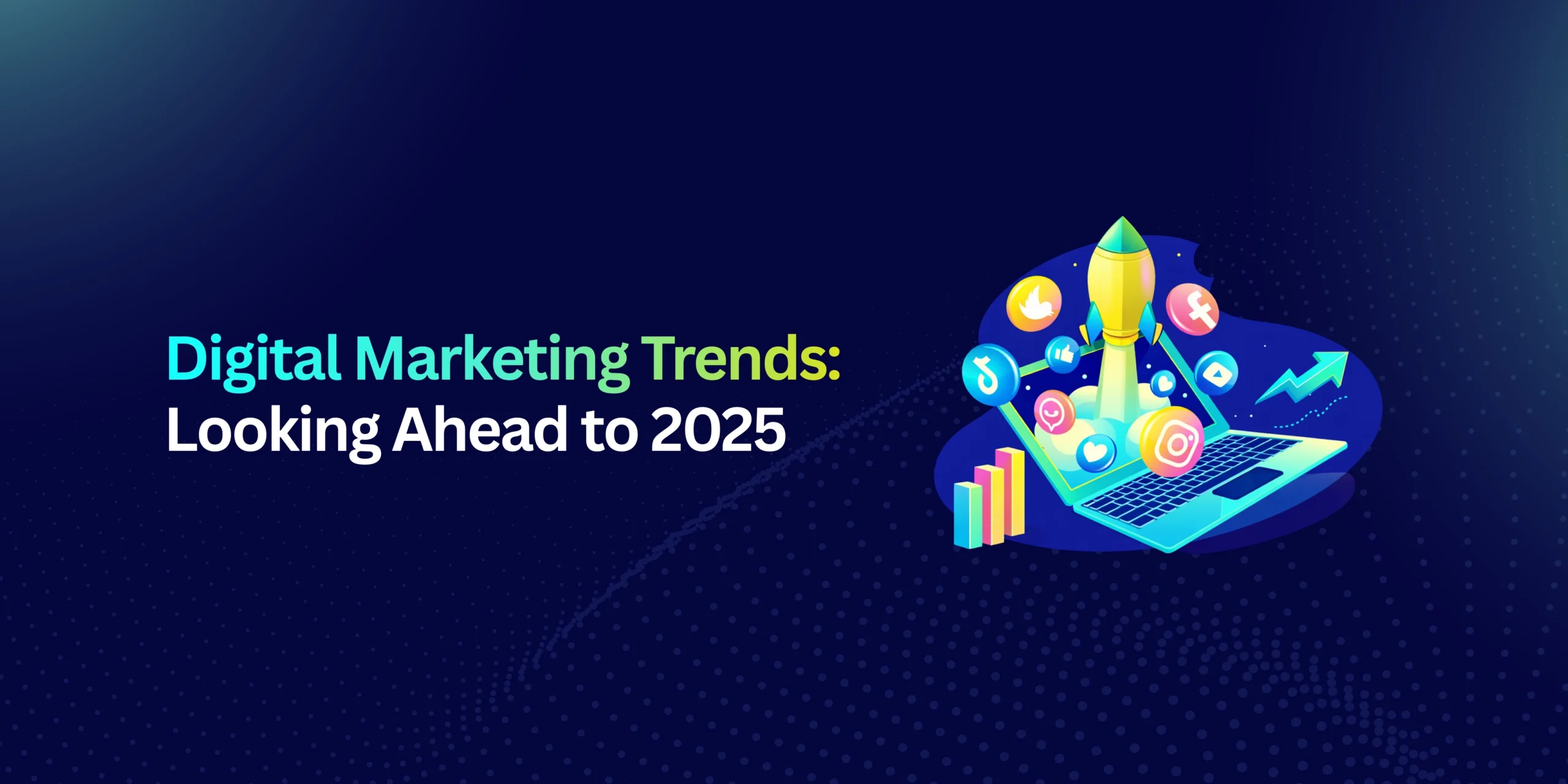
Digital Marketing Trends: Looking Ahead to 2026
Three months ago, everything worked.
Your Facebook ads delivered solid ROAS. Content ranked on page one. Your customers found you easily. Business was good.
Then the algorithm changed. Again. And again.
Now your cost per acquisition is double what it was. Your organic reach has tanked. Your carefully crafted marketing campaigns are flopping. And your competitors who figured out the new rules are eating your lunch.
Digital marketing in 2026 isn't playing by 2023 rules anymore. The platforms don't care about your comfort zone. They don't care if you mastered last year's tactics. They only care about one thing – rewarding businesses that adapt fast and leaving behind those that don't.
If your digital marketing strategy looks like it did two years ago, you'll watch your costs skyrocket while results plummet. If you understand what's coming? You'll capture customers at lower costs while competitors scramble.
The difference isn't luck or bigger budgets. It's understanding where digital marketing is actually headed.
Let us show you the trends that are already reshaping digital marketing in 2026, why traditional approaches are dying, and what successful businesses are doing right now to stay ahead.
Trend 1: AI Integration- From Tool to Foundation
AI-driven strategies now account for 75% of all marketing activities. This isn't future talk – it's happening right now.
How AI Changed the Game
AI-powered platforms create over 15 million ads monthly. Meta, TikTok, LinkedIn, and Snapchat have shifted toward automated optimization that makes real-time decisions faster than any human team could.
Google's AI overviews reach over 1 billion users across 100+ countries. This fundamentally changed how people interact with search results. Position-one organic click-through rates dropped from 50% to 28-30% because Google displays more information directly in results.
60% of U.S. searches now result in zero clicks. People get their answers without ever visiting a website.
What This Means for Marketers
AI handles operations. Campaign optimization. Bid adjustments. Audience targeting. Performance analysis. All happening automatically, in real-time.
But here's the twist: human-created content consistently outperforms purely AI-generated material. Customers still crave authentic connections, not robot-generated marketing copy.
The winning strategy: Use AI for efficiency and scale. Use human creativity for strategy and emotional connection.
What should be your AI Action Plan?
Start with automation in these areas:
- Campaign bid optimization and budget allocation
- Email personalization based on behavior triggers
- Content variation testing at scale
- Customer segmentation and scoring
Keep humans focused on:
- Creative strategy and brand voice
- Customer relationship building
- Strategic decision-making
- Ethical oversight and quality control
Trend 2: Search Everywhere Optimization: Google Isn't Enough Anymore
Traditional SEO focused on one platform: Google. That's not enough in 2026.
YouTube is now the second-largest search engine globally. People search for how-to content, product reviews, and entertainment there first.
40% of Gen Z uses TikTok as their primary search tool. They're not googling anymore – they're watching short videos from creators they trust.
ChatGPT and AI platforms handle complex research queries that used to drive traffic to websites. People ask AI assistants for recommendations instead of clicking through search results.
The Multi-Platform Reality
16% of Google searches now display images. 62% include video carousels. Search results themselves have become multimedia experiences.
This means optimizing for discovery across:
- Traditional search engines (Google, Bing)
- Video platforms (YouTube, TikTok)
- Social media (Instagram, LinkedIn, Pinterest)
- AI assistants (ChatGPT, Google Bard)
- App stores and platform-specific search
Your Search Everywhere Strategy
Create content in multiple formats:
- Blog posts for traditional search engines
- YouTube videos for visual learners
- TikTok shorts for quick tips and entertainment
- Instagram carousels for visual storytelling
- LinkedIn articles for professional audiences
Same core message, optimized for each platform's unique search behavior and audience expectations.
Trend 3: Voice Search Dominance: Conversations Replace Keywords
Voice search represents over 1 billion monthly searches and growing fast.
But people don't talk to their devices the way they type into search boxes.
Typed search: "best pizza Chicago"
Voice search: "Where can I get good deep-dish pizza near me that's open now?"
Optimize for Natural Language
Your content needs to match how people actually speak:
- Answer complete questions, not just target keywords
- Use conversational language throughout
- Structure content for featured snippets
- Include FAQ sections with natural question phrasing
Schema markup becomes critical for helping voice assistants understand and recommend your content.
Trend 4: Social Commerce: The New Shopping Experience
Social commerce revenues are projected to surpass $1 trillion by 2028. Shopping is moving directly into social platforms.
Why Social Commerce Exploded
Customers can discover products through trusted creators, research in comments, and buy without ever leaving the app. The entire shopping journey happens inside platforms they already use daily.
Influencers drive product discovery more effectively than traditional advertising. Their authentic recommendations feel like advice from friends, not marketing messages.
Live Shopping Takes Over
Live commerce allows real-time product demonstrations, instant Q&A, and time-limited offers that create urgency. Platforms are pushing this feature aggressively because they take a cut of sales.
Your Social Commerce Strategy
Shoppable posts make every piece of content a potential sales opportunity. Product tags, integrated checkout, and one-click purchasing remove friction from the buying process.
Micro-influencer partnerships deliver better ROI than celebrity endorsements. Niche creators with engaged audiences drive authentic recommendations that actually convert.
User-generated content sells more effectively than professional product photos. Real customers sharing genuine experiences build trust that polished marketing can't match.
Trend 5: Visual and Video Content Dominance
Video content continues dominating digital spaces. 62% of searches include video carousels, and users engage with videos more than any other content type.
Short-Form Video Rules
TikTok, Instagram Reels, and YouTube Shorts have made short-form video the preferred content format. Brands need to create quick, impactful videos that capture attention immediately.
Visual search processes 10 billion monthly queries. Customers point their cameras at products to get information, compare prices, and find similar items instantly.
Your Video Strategy
Create for mobile consumption: Vertical format, captions for sound-off viewing, hooks in the first 3 seconds.
Optimize for platform algorithms: Each platform rewards different video styles. TikTok wants entertainment, LinkedIn prefers educational content, Instagram favors aspirational visuals.
Make videos shoppable: Direct integration with shopping features turns passive viewers into active buyers.
Trend 5: Multi- Channel Integration: Breaking Down Silos
Businesses that effectively integrate marketing channels see 35% higher customer retention rates and 40% increase in average order value.
The Omnichannel Imperative
Separate campaigns on different platforms create disjointed experiences. Customers expect consistency across every touchpoint.
Integrated campaigns perform dramatically better:
- 35% uplift in overall marketing performance
- 25% improvement in marketing ROI
- Stronger brand recognition and recall
Cross-Platform Visibility
Search engines factor social content into rankings. Brand awareness on social platforms drives branded search queries, which dominate Google's top 10 searches.
Seven of the top 10 Google queries are brand names like Amazon, YouTube, Instagram, Facebook, and Gmail. Building brand recognition across platforms drives valuable direct searches.
Your Integration Strategy
Create cohesive campaigns across all channels:
- Consistent brand messaging and visuals
- Unified audience targeting and segmentation
- Coordinated campaign calendar
- Shared data and insights across platforms
Trend 6: First-Party Data: The New Gold Standard
With third-party cookies disappearing, first-party data has become invaluable. Brands that effectively collect and use direct customer information will outperform competitors relying on external data sources.
Building Your Data Foundation
Email lists remain the most valuable asset. Every marketing campaign should include email capture strategies.
Customer data platforms unify information from all touchpoints into complete customer profiles. This enables true personalization at scale.
Progressive profiling collects data gradually through multiple interactions instead of overwhelming customers with long forms.
Privacy-First Approach
Customers will share data if they receive clear value in return. Be transparent about data collection and usage. Provide genuine benefits like personalized recommendations and exclusive offers.
Give customers control over their data and preferences. Trust builds long-term relationships that drive lifetime value.
Trend 7: Purpose-Driven Marketing
Sustainability and social responsibility shape consumer choices more than ever. Consumers care deeply about authenticity and values alignment.
Authenticity Over Perfection
Purpose-driven campaigns must reflect genuine company values, not just trendy causes. Customers research brands thoroughly and call out inconsistencies publicly.
User-generated content showcases brand authenticity better than corporate campaigns. Real customers sharing their experiences build credibility that marketing messages can't match.
Your Values-Based Strategy
Integrate values into operations, not just marketing messages. Customers want to see authentic commitment through actions, not just words.
Support causes consistently over time. One-off campaigns during trending moments feel opportunistic. Long-term commitment demonstrates genuine values.
Encourage customer advocacy. When customers create content showing how your brand aligns with their values, it's infinitely more credible than corporate marketing.
Common Digital Marketing Mistakes Killing Results
#1 Ignoring Mobile-First Reality
80% of interactions happen on mobile devices. If your campaigns aren't optimized for mobile, you're invisible to most customers.
#2 Treating AI as Optional
Competitors using AI for optimization, personalization, and automation are outperforming manual efforts. AI adoption is no longer a competitive advantage – it's table stakes.
#3 Single-Channel Focus
Customers discover, research, and buy across multiple platforms. Single-channel campaigns miss the majority of customer touchpoints.
Generic, Non-Personalized Experiences
73% of consumers expect personalized experiences. Generic marketing messages get ignored while personalized content drives engagement and conversions.
#5 Chasing Every Trend
Not every trend fits every business. Focus on trends that align with customer behavior and business goals, not just what's currently hyped.
So What’s Ahead?
Here's exactly what to do after reading this:
- Assess your AI readiness: Which repetitive tasks can be automated immediately?
- Map customer touchpoints: Where do customers actually discover and research your products?
- Audit your content strategy: Are you creating for multiple platforms or just one?
- Review your data practices: How effectively are you collecting and using first-party data?
- Test one new trend: Pick the trend that best aligns with your customers and test it for 30 days
Digital marketing in 2026 rewards businesses that adapt quickly and execute consistently. The trends outlined here aren't distant predictions. They're already reshaping how successful brands reach and convert customers.
Navigating digital marketing's rapid evolution requires expertise across multiple channels and emerging technologies. Shankom delivers integrated digital marketing strategies that leverage AI automation, multi-platform optimization, and data-driven personalization. We help businesses adapt quickly to algorithm changes and implement cutting-edge tactics that drive measurable ROI while you focus on running your business.
Your competitors are implementing these strategies right now. The question isn't whether you'll adapt, but how quickly. The businesses dominating digital marketing in 2026 understand their customers deeply, use technology intelligently, and create authentic experiences across every channel. Your digital marketing breakthrough might be just one trend away. Start implementing today.