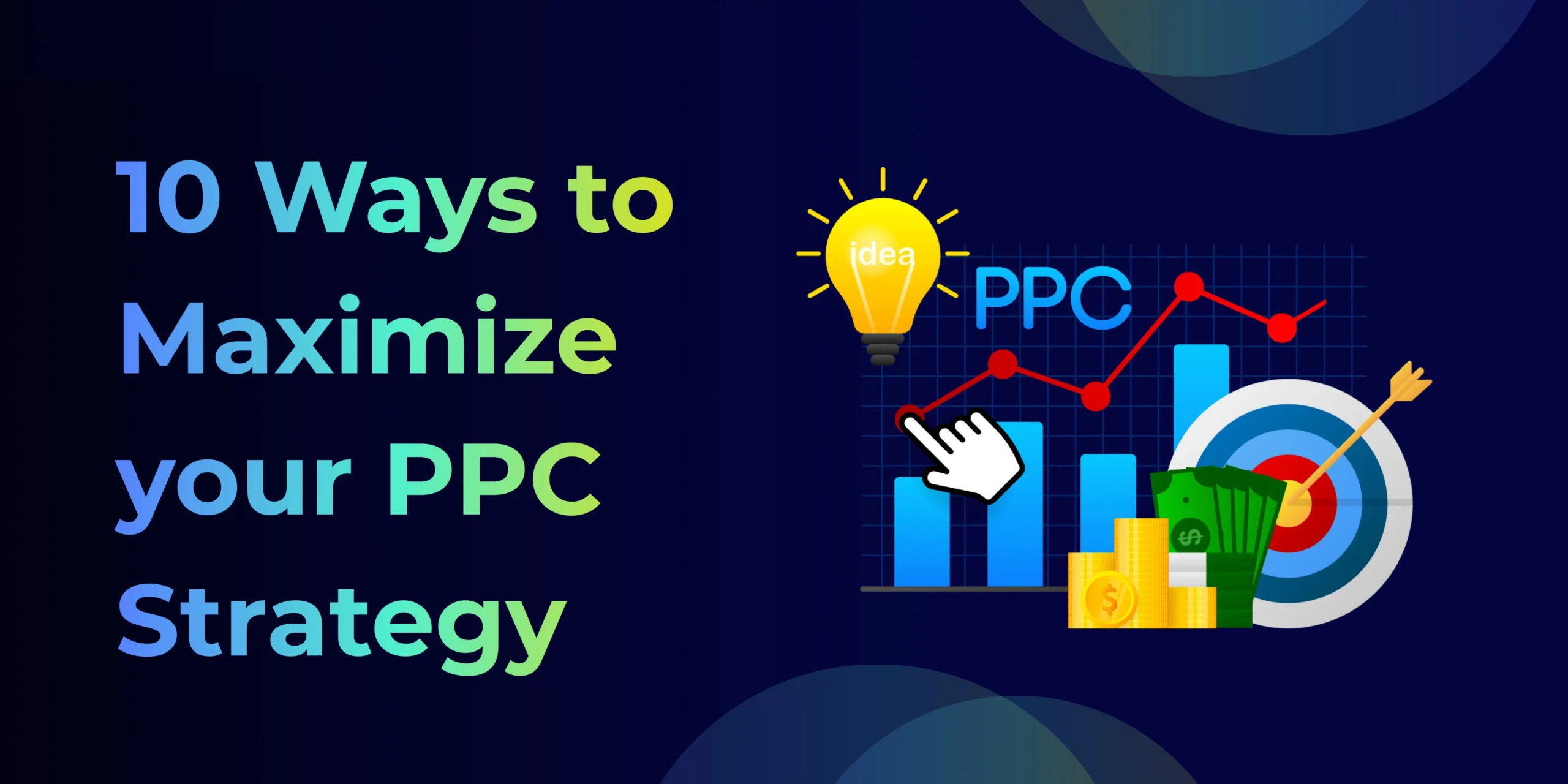
10 Ways to Maximize Your PPC Strategy
Do your reports show your PPC campaigns running, but results seem mediocre? Clicks trickle in steadily, but conversions stay disappointingly flat. Costs creep higher each month while competitors seem to capture better positions for less money. You're not alone in this frustration. Many of us launch PPC campaigns with basic setups and wonder why performance plateaus quickly. We pick keywords, write generic ads, and hope for magical results.
The difference between struggling campaigns and profitable ones isn't luck or bigger budgets. It's strategic optimization that squeezes maximum value from every advertising dollar. Smart PPC strategy implementation transforms average campaigns into conversion machines. These optimization tactics don't require massive budget increases. They need strategic thinking and consistent execution that compounds results over time.
1. Master Advanced PPC Bidding Strategies
Basic bidding approaches leave money on the table every single day. An effective PPC strategy begins with comprehensive keyword research that goes beyond basic search volume metrics. Start by identifying high-intent keywords that signal users are ready to convert, for example:
- Commercial intent keywords such as "buy (our product) now," "( TargetServices) near me," "get a free quote"
- Long-tail variations with lower competition and higher conversion rates
- Competitor analysis to understand which keywords drive success in your industry
Key tips to improve PPC performance through keywords:
- Develop comprehensive negative keyword lists at campaign and ad group levels
- Use keyword match types strategically: exact match for the highest-converting terms, phrase match for moderate expansion
- Review search terms reports weekly to identify irrelevant queries and optimize targeting
2. Optimize Your Ad Copy for Maximum Engagement
Your ad copy serves as the first interaction potential customers have with your brand. Create Responsive Search Ads (RSAs) that allow Google's machine learning to test different combinations based on user intent. Craft multiple headline variations that address:
- Benefit-driven messaging highlighting what users gain
- Feature-focused content showcasing specific product attributes
- Emotional appeals that create urgency or excitement
Include ad customizers and dynamic keyword insertion to make ads more relevant to specific searches. This personalization significantly improves click-through rates and Quality Scores, essential components of PPC optimization.
3. Leverage Advanced Audience Targeting
Modern PPC strategy extends beyond keyword targeting to sophisticated audience segmentation. Understanding how to improve PPC performance through audience targeting requires detailed customer personas mapped to specific campaign structures. Key targeting strategies include:
Demographic and Geographic Targeting
- Age, gender, income, and education level for B2C campaigns
- Company size and industry targeting for B2B campaigns
- Radius targeting around business locations
Behavioral Targeting
- In-market audiences based on online activities and purchase history
- Website visitors who completed specific actions (downloads, video views)
- Lookalike audiences based on the highest-value customers
Remarketing Campaigns
Create segmented remarketing lists based on user behavior - cart abandoners might respond to free shipping offers, while previous customers might be interested in complementary products.
4. Focus on Landing Page Optimization
Landing page optimization determines where many PPC campaigns succeed or fail. Your landing pages must deliver on ad promises while providing smooth user experiences that encourage conversions.
Essential optimization elements:
- Message matching between ad copy and landing page headlines
- Mobile-first design with fast loading times (under 3 seconds)
- Clear conversion funnels that guide users toward desired actions
- Trust signals like security badges, testimonials, and guarantees
A/B testing different headlines, images, call-to-action buttons, and form lengths provides valuable insights into how to improve PPC performance. Use statistical significance testing to ensure meaningful results.
5. Implement Smart Bidding and Budget Management
Advanced PPC bidding strategies leverage machine learning to optimize campaigns beyond human capabilities. Understanding and implementing these strategies is crucial for modern PPC optimization. Automated Bidding options include:
- Target CPA (Cost Per Acquisition) - Set desired cost per conversion
- Target ROAS (Return On Ad Spend) - Focus on maximizing revenue
- Maximize Conversions - Fully utilize daily budget for most conversions
- Maximize Conversion Value - Optimize for the highest revenue potential
Budget Management Best Practice: Apply the 80/20 rule - allocate 80% of the budget to proven, high-performing campaigns and reserve 20% for testing new opportunities. Monitor impression share metrics to identify campaigns limited by budget and make informed decisions about increases.
6. Improve Your Quality Score
Quality Score directly impacts PPC optimization efforts and campaign costs. The three components require focused attention:
Expected Click-Through Rate
- Write compelling ad copy using relevant keywords in headlines
- Ensure ads match user intent and search queries
- Maintain consistent optimization efforts as historical performance influences this metric
Ad Relevance
- Create tightly themed ad groups with specific keyword sets
- Develop targeted messaging for different keyword themes
- Avoid generic ads for diverse keyword sets
Landing Page Experience
- Ensure fast loading times and mobile-friendliness
- Provide relevant content and clear calls-to-action
- Include original content and business transparency
Higher Quality Scores lead to lower costs and better ad positions, making this crucial for PPC optimization.
7. Utilize Ad Extensions Effectively
Ad extensions expand your ads with additional information, significantly improving visibility and click-through rates as part of comprehensive PPC optimization.
Most Effective Extension Types:
- Sitelink extensions for important product categories and special offers
- Callout extensions highlighting unique selling points like "Free Shipping" or "24/7 Support"
- Structured snippet extensions showcasing specific business aspects
- Location extensions displaying address and phone number for local businesses
- Price extensions showing specific products or services with corresponding prices
Extensions help differentiate your ads from competitors and provide additional reasons for users to choose your business.
8. Embrace Video Content in Your Strategy
Video advertising represents one of the fastest-growing segments and should be integrated into your comprehensive PPC strategy. Understanding how to improve PPC performance through video requires creating engaging, relevant content.
Effective Video Ad Types include:
- Product demonstrations showing key features and problem-solving capabilities
- Customer testimonials provide social proof and build trust
- Behind-the-scenes content humanizing your brand and demonstrating values
- Time-sensitive promotions with countdowns driving immediate action
Pro tip: Create video ad sequences that tell complete stories across multiple touchpoints. Start with awareness videos, retarget viewers with specific product information, and present compelling offers to engaged users.
9. Set Up Comprehensive Conversion Tracking
Accurate conversion tracking forms the foundation of effective PPC optimization and is essential for understanding how to improve PPC performance. Without proper tracking, you cannot make informed optimization decisions.
Essential Tracking Components:
- Google Analytics 4 integration with Google Ads for comprehensive user behavior insights
- Enhanced e-commerce tracking to understand which products drive most revenue
- Enhanced Conversions using first-party customer information for improved accuracy
- Conversion attribution models that align with your business model and customer journey length
Track micro-conversions beyond primary goals:
- Newsletter signups
- Video views
- Whitepaper downloads
- Quote requests
Implement offline conversion tracking for businesses with phone sales or in-store purchases to connect online clicks with offline revenue.
10. Leverage PPC Brand Bidding and Competitive Strategies
PPC brand bidding has both opportunities and challenges in competitive markets. Understanding when and how to bid on branded terms is crucial for comprehensive PPC strategy development. Here are two scenarios you should be aware of:
Own Brand Protection:
- Bid on your branded terms to protect search real estate
- Provide cost-effective traffic from high-intent users
- Monitor competitor activity and adjust bids to maintain visibility
- Create compelling ad copy emphasizing unique advantages
Competitive Strategies:
- Use competitive intelligence tools to analyze competitor keywords and ad copy
- Identify gaps in competitor coverage for market share opportunities
- Create conquest campaigns targeting competitors' customers through interest-based audiences
- Focus on highlighting unique value propositions rather than direct competitor mentions
Pro tip: Develop defensive strategies, including regular monitoring of branded search results, increased bids when competitors appear, and trademark protection when appropriate.
Measuring and Improving Performance
As a business owner, you must know that improving PPC performance requires focusing on metrics that align with business objectives:
- Click-through rate (CTR) indicates ad relevance and user interest
- Cost per conversion and conversion rate show campaign efficiency
- Return on ad spend (ROAS) and lifetime value (LTV) determine long-term profitability
- Impression share metrics revealing growth opportunities and budget optimization needs
Conduct regular performance audits to ensure your PPC strategy remains effective. Conduct monthly reviews of account structure, keyword performance, ad copy effectiveness, and landing page conversion rates. Use insights to develop action plans for continuous improvement.
The key to long-term PPC success lies in treating optimization as an ongoing process rather than a one-time effort. Market conditions, competitor activities, and user behaviors constantly evolve, requiring adaptive strategies and continuous refinement of your PPC optimization efforts.
Final thoughts
PPC optimization success comes from systematic implementation rather than attempting every tactic simultaneously without strategic focus. The most successful PPC advertisers treat campaigns as ongoing strategic experiments rather than set-and-forget advertising channels. Focus optimization efforts on changes that align with actual business objectives rather than just improving PPC metrics without business impact.
Frequently Asked Questions
Which PPC bidding strategy works best for new campaigns?
New campaigns should start with manual CPC bidding to maintain control while algorithms gather conversion data. Automated strategies require substantial conversion history before delivering optimal results. Switch to Target CPA after accumulating at least 15-20 conversions monthly for lead generation. Target ROAS works better for e-commerce with varying profit margins. Test different PPC bidding strategies on separate campaigns rather than changing existing successful configurations to prevent performance disruption.
How often should I optimize my PPC campaigns?
Weekly performance reviews enable budget adjustments and identification of urgent optimization needs. Major strategic changes should happen monthly after sufficient data accumulates. Daily monitoring catches critical issues but avoids frequent changes that prevent campaigns from stabilizing properly through algorithmic learning. PPC optimization requires patience. Allow 2-4 weeks between significant changes to measure impact accurately before implementing additional modifications.
Should I bid on competitor brand names?
PPC brand bidding on competitor terms can capture comparison shoppers effectively where legally permissible and strategically relevant. Focus on competitors offering similar solutions rather than bidding broadly on all competitor terms. Relevance matters for both performance and compliance. Create dedicated competitor campaigns with unique ad copy emphasizing your competitive advantages without making false claims.
How do I identify which keywords deserve optimization priority?
Prioritize keywords with high impression volume but disappointing conversion rates since these represent the most significant missed opportunities. Focus on keywords positioned on page two, where modest bid increases often provide substantial position improvements and traffic growth. Review search term reports weekly to identify high-performing queries that should become exact match keywords with dedicated optimization attention.
What delivers the biggest impact for improving PPC performance?
Landing page optimization frequently provides more dramatic performance improvements than any other single factor. Outstanding ads cannot overcome poor conversion experiences. Focus on how to improve PPC performance through coordinated improvements across ads, keywords, bidding, and landing pages, working together rather than optimizing elements in isolation.